


Email Marketing: Building Loyalty with Customer Journeys
In today’s crowded digital marketplace, where consumers are bombarded with countless marketing messages daily, building genuine customer loyalty has become both more challenging and more crucial than ever. While social media grabs headlines and paid advertising captures immediate attention, email marketing remains the quiet powerhouse that consistently delivers exceptional ROI and fosters deep, lasting relationships with customers.
The secret? It’s not just about sending promotional emails or newsletters anymore. The most successful brands understand that email marketing is about crafting meaningful customer journeys that guide subscribers from initial interest to passionate brand advocacy. These carefully orchestrated sequences don’t just sell products—they build trust, provide value, and create emotional connections that keep customers coming back for years.
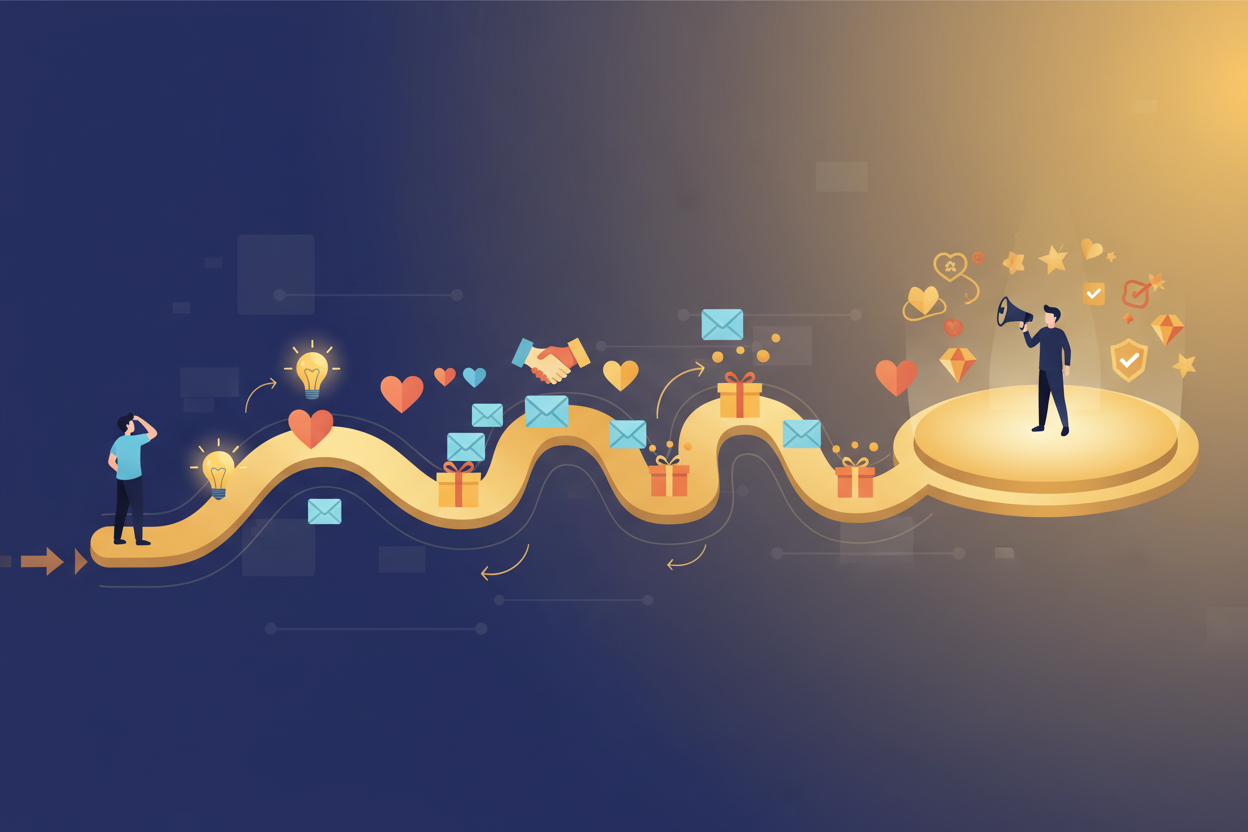
Whether you’re a small business owner looking to strengthen relationships with your existing customers or a marketing professional seeking to enhance your email strategy, understanding how to leverage customer journey mapping in your email campaigns can transform your results and create a loyal community around your brand.
Understanding Customer Journey Mapping in Email Marketing
Customer journey mapping is the process of visualizing every touchpoint a customer has with your brand, from their first awareness of your company to their ongoing relationship as a loyal advocate. In email marketing, this translates to creating strategic sequences that meet customers exactly where they are in their relationship with your brand.
Think of it this way: you wouldn’t propose marriage on a first date, and you shouldn’t try to sell your most expensive product to someone who just subscribed to your newsletter yesterday. Customer journey mapping helps you understand the natural progression of relationships and align your email content accordingly.
The most effective email customer journeys typically follow a pattern that mirrors human relationships. They start with introductions and value-building, progress through trust-building and education, and eventually lead to deeper engagement and loyalty. Each stage requires different messaging, different offers, and different levels of personalization.
What makes email particularly powerful for customer journey mapping is its intimate nature. Unlike social media posts that compete for attention in busy feeds, emails land directly in your customer’s personal inbox. This creates an opportunity for one-on-one communication that, when done thoughtfully, can feel like receiving a letter from a trusted friend rather than a sales pitch from a faceless corporation.
The Foundation: Welcome Series That Set Expectations
Your welcome series is arguably the most important component of your email customer journey. It’s your first impression, your chance to set expectations, and your opportunity to begin building the relationship that will determine whether a subscriber becomes a loyal customer or simply another email address that eventually unsubscribes.
A well-crafted welcome series does much more than just say “thanks for subscribing.” It introduces your brand’s personality, shares your story, and begins to establish the value proposition that will keep subscribers engaged. The best welcome series feel personal and authentic, often including behind-the-scenes content, founder stories, or insights into company values that help subscribers connect with your brand on an emotional level.
Timing is crucial in welcome series. Research shows that welcome emails have some of the highest open rates of any email type, but this enthusiasm quickly wanes if not properly nurtured. A strategic welcome series might include an immediate confirmation email, followed by a series of 3-7 emails spaced over the first few weeks of subscription. Each email should build upon the last, gradually introducing different aspects of your brand while providing genuine value.
Consider including elements like exclusive content, special offers for new subscribers, or educational resources that align with why someone subscribed in the first place. If someone joined your list to receive marketing tips, don’t immediately start selling them your consulting services. Instead, provide valuable marketing insights that demonstrate your expertise and build trust over time.
Segmentation Strategies for Personalized Customer Experiences
One-size-fits-all email marketing is a relic of the past. Today’s consumers expect personalized experiences that acknowledge their unique preferences, behaviors, and position in the customer journey. This is where sophisticated segmentation strategies become essential for building loyalty through email marketing.
Effective segmentation goes far beyond basic demographics. While knowing your customer’s age and location can be useful, behavioral segmentation provides much more actionable insights. This includes tracking which emails subscribers open, which links they click, what products they browse on your website, and how frequently they engage with your content.
Purchase history segmentation is particularly powerful for building loyalty. Customers who have made multiple purchases should receive different messaging than first-time buyers. Long-time customers might appreciate early access to new products or exclusive loyalty rewards, while recent purchasers might benefit from onboarding sequences that help them get the most value from their purchase.
Geographic segmentation can also play a crucial role, especially for businesses with physical locations or those that ship products. Sending location-specific content, local event invitations, or region-appropriate product recommendations shows customers that you understand and cater to their specific needs and circumstances.
The key is to start simple and gradually increase sophistication. Begin with basic segments like new subscribers versus existing customers, then add layers based on engagement level, purchase history, and behavioral patterns. As your segmentation becomes more refined, your ability to deliver truly personalized experiences that build loyalty will dramatically improve.
Nurturing Sequences That Build Trust and Value
Between the welcome series and purchase-focused campaigns lies the crucial middle ground of nurturing sequences. These ongoing email series are designed to build trust, provide value, and keep your brand top-of-mind without being overly promotional. They’re the foundation of long-term customer loyalty because they demonstrate that you care about your subscribers’ success, not just their wallets.
Educational content forms the backbone of most effective nurturing sequences. This might include how-to guides, industry insights, tips and tricks, or case studies that help subscribers solve problems or achieve their goals. The key is ensuring this content aligns with your audience’s interests and challenges while subtly reinforcing your expertise and brand values.
Storytelling is another powerful element of nurturing sequences. Sharing customer success stories, behind-the-scenes glimpses of your business, or personal anecdotes from team members helps humanize your brand and create emotional connections. People don’t just buy products or services; they buy from people and companies they know, like, and trust.
Consistency is crucial in nurturing sequences. Whether you send weekly newsletters, bi-weekly tips, or monthly deep-dive articles, maintaining a predictable schedule helps build anticipation and habit formation among your subscribers. However, consistency doesn’t mean rigidity—be prepared to adjust frequency and content based on subscriber engagement and feedback.
The most successful nurturing sequences also include interactive elements that encourage engagement beyond just reading. This might include surveys that gather feedback, polls that spark discussion, or calls-to-action that invite subscribers to share their own experiences or questions. The more engaged subscribers become with your content, the stronger their connection to your brand.
Post-Purchase Engagement and Retention Tactics
The relationship with your customer doesn’t end at the point of purchase—in many ways, it’s just beginning. Post-purchase email sequences are critical for building long-term loyalty because they help customers get maximum value from their purchase while opening doors for future sales and referrals.
Order confirmation and shipping notifications are obvious starting points, but they’re also opportunities to reinforce your brand personality and set expectations for the customer experience. Instead of generic, transactional messages, these emails can include personal thanks, care instructions, or suggestions for complementary products.
Onboarding sequences for new customers are particularly important for complex products or services. These might include setup guides, best practice tips, or video tutorials that help customers achieve success quickly. The faster customers see value from their purchase, the more likely they are to become repeat buyers and brand advocates.
Follow-up sequences that check in on customer satisfaction serve multiple purposes. They demonstrate that you care about the customer experience beyond the sale, provide opportunities to address any issues before they become major problems, and create natural openings for requesting reviews or testimonials.
Consider implementing milestone emails that celebrate customer achievements or anniversaries. This might include congratulating customers on their first successful use of your product, acknowledging their one-year anniversary as a customer, or recognizing their loyalty with special offers or exclusive access to new features.
Measuring Success and Optimizing Customer Journey Performance
Building loyalty through email customer journeys requires ongoing measurement and optimization. Unlike one-off campaigns, customer journeys generate data over extended periods, providing rich insights into what resonates with different segments of your audience and where improvements can be made.
Traditional email metrics like open rates and click-through rates remain important, but customer journey analysis requires deeper metrics. Customer lifetime value, repeat purchase rates, and engagement progression through different journey stages provide more meaningful insights into the loyalty-building effectiveness of your email programs.
A/B testing becomes particularly valuable in customer journey optimization. Testing different subject lines, send times, content formats, and call-to-action approaches can reveal preferences that vary across different customer segments and journey stages. The key is to test one element at a time and allow sufficient sample sizes to generate statistically significant results.
Feedback loops are essential for continuous improvement. This includes both direct feedback through surveys and polls, and indirect feedback through behavioral analysis. Pay attention to unsubscribe patterns, engagement drops, and conversion points to identify areas where your customer journey might need adjustment.
Regular journey audits should be part of your optimization process. As your business evolves, your products change, and your customer base grows, your email customer journeys need to evolve as well. What worked for a small startup might not be appropriate for a growing company with multiple product lines and diverse customer segments.
Building Long-Term Loyalty Through Authentic Relationships
At its core, email marketing success in building customer loyalty comes down to authenticity and genuine relationship-building. In an age of automation and artificial intelligence, the brands that stand out are those that manage to maintain human connection and authentic communication even as they scale their operations.
This means moving beyond transactional thinking toward relationship thinking. Instead of viewing each email as an opportunity to sell something, consider how each message contributes to the overall relationship you’re building with your subscribers. Does this email provide value? Does it reinforce your brand values? Does it help the subscriber achieve their goals?
Transparency plays a crucial role in authentic relationship-building. This includes being honest about what subscribers can expect from your emails, acknowledging when you make mistakes, and being open about your business practices and values. Customers appreciate honesty and are more likely to remain loyal to brands they trust.
Remember that loyalty is earned through consistent positive experiences over time. It’s not just about having a great product or sending clever emails—it’s about creating a comprehensive customer experience that consistently exceeds expectations and demonstrates genuine care for customer success and satisfaction.
Email marketing, when approached as a tool for relationship-building rather than just promotion, becomes a powerful platform for creating the kind of customer loyalty that drives sustainable business growth. By mapping thoughtful customer journeys, personalizing experiences, and consistently providing value, you can transform your email list from a collection of addresses into a community of loyal brand advocates who not only continue to purchase from you but actively recommend you to others.
The investment in building these relationships through strategic email customer journeys pays dividends far beyond immediate sales, creating a foundation of loyalty that can sustain and grow your business for years to come.
Free Traffic Sources
Get Access To 15 Of The HOTTEST Free Traffic Sources On The Planet!


