
Home Business: Navigating the Legal Landscape
Starting a home-based business can feel like stepping into uncharted territory. One day you’re working from your kitchen table with nothing but an idea and a laptop, and the next, you’re dealing with business licenses, tax obligations, and zoning regulations. The legal landscape surrounding home businesses might seem overwhelming at first, but understanding these requirements isn’t just about staying compliant – it’s about protecting your dreams and building a solid foundation for growth.
Whether you’re launching an online consulting service, selling handmade crafts, or offering freelance writing services, every home business owner needs to understand the legal framework that governs their operations. The good news? Most legal requirements for home businesses are straightforward once you know what to look for. Let’s walk through the essential legal considerations that will help you run your home business confidently and professionally.
Understanding Business Structure and Registration Requirements
Before you hang out your virtual shingle, you’ll need to decide how to structure your business legally. This decision affects everything from your tax obligations to your personal liability protection. The most common structures for home businesses include sole proprietorships, limited liability companies (LLCs), partnerships, and corporations.
A sole proprietorship is the simplest option – you’re essentially operating as yourself, using your Social Security number for tax purposes. However, this structure offers no protection for your personal assets if your business faces legal issues. Many home business owners choose to form an LLC instead, which provides personal asset protection while maintaining operational simplicity.

The registration process varies significantly by state and locality. Some areas require minimal paperwork for home businesses, while others have more complex requirements. You’ll typically need to register your business name (assuming it’s different from your legal name), obtain any necessary licenses, and potentially register for state and local taxes. Don’t forget to check if your county or city requires a general business license for home-based operations.
Zoning Laws and Home Business Restrictions
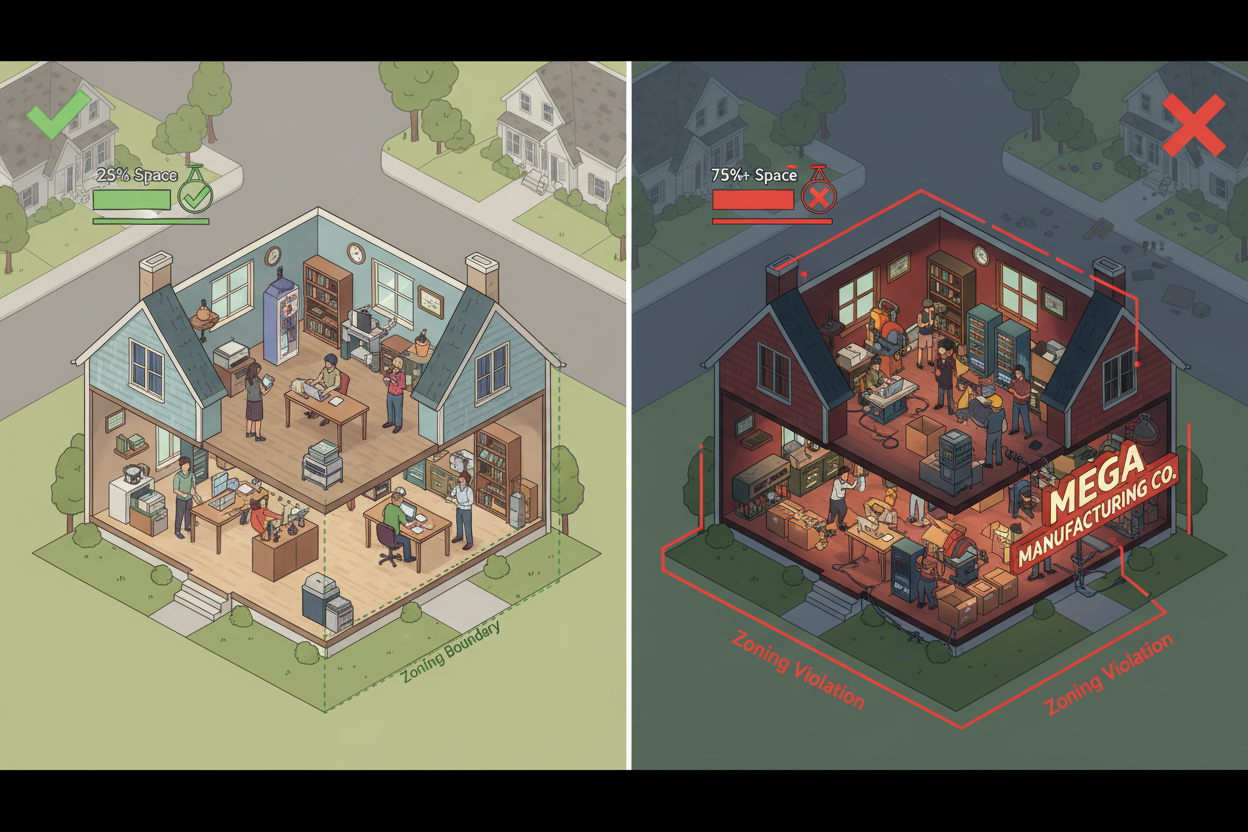
Here’s where things can get tricky for home business owners. Zoning laws exist to maintain the character of residential neighborhoods, and they often include specific restrictions on commercial activities. These regulations can vary dramatically from one municipality to another, so what’s perfectly legal in one town might be prohibited just across the city line.
Most residential areas allow “incidental” home businesses – those that don’t significantly impact the neighborhood. This typically includes online businesses, consulting services, and small-scale crafting operations. However, you might face restrictions on activities like manufacturing, storing large quantities of inventory, or having clients regularly visit your home.
Common zoning restrictions include limits on the number of employees who can work from your home, restrictions on exterior signage, and prohibitions against certain types of equipment or machinery. Some areas also limit the percentage of your home that can be used for business purposes. Before investing heavily in your home business setup, contact your local zoning office or planning department to understand what’s allowed in your specific area.
Tax Obligations and Home Office Deductions
Running a business from home creates unique tax situations that can work in your favor – if you understand the rules. The home office deduction is one of the most valuable benefits available to home business owners, but it comes with specific requirements that you must meet to avoid problems with the IRS.
To qualify for the home office deduction, you must use part of your home regularly and exclusively for business purposes. This means your home office can’t double as a guest bedroom or family recreation room. The space needs to be your primary place of business or used regularly for meeting clients or customers.
You can calculate the deduction using either the simplified method (a flat rate per square foot of office space) or the actual expense method (deducting the business percentage of your home expenses). Beyond the home office deduction, you’ll also need to track business expenses, understand quarterly tax payment requirements, and potentially deal with state and local business taxes.
Self-employment tax is another consideration that catches many new home business owners off guard. Unlike traditional employees who split Social Security and Medicare taxes with their employers, self-employed individuals pay the full amount. Planning for this additional tax burden is crucial for maintaining healthy cash flow.
Insurance Considerations for Home-Based Businesses
Your homeowner’s or renter’s insurance policy probably doesn’t cover business activities, leaving your home business vulnerable to various risks. This gap in coverage can be expensive if you face property damage, liability claims, or business interruption issues.
Business liability insurance protects you if someone is injured on your property during business activities or if your products or services cause harm to others. Professional liability insurance (also called errors and omissions insurance) covers claims related to professional mistakes or negligence. If you store inventory or expensive equipment at home, you might need additional property coverage specifically for business assets.
Some insurance companies offer home business endorsements that extend your homeowner’s policy to cover basic business activities. For more substantial operations, you might need a separate business owner’s policy (BOP) that combines property and liability coverage. The key is being honest with your insurance agent about your business activities – failing to disclose your home business could void your coverage entirely.
Employment Law and Hiring Considerations
If you’re planning to hire employees for your home business, you’ll enter a more complex area of employment law. Federal and state regulations governing wages, working conditions, and employee rights apply to home businesses just as they do to traditional commercial operations.
However, many jurisdictions have specific restrictions on employing people in residential areas. Some zoning laws prohibit having employees work from your home entirely, while others limit the number of non-resident employees. You’ll also need to consider practical issues like parking, noise, and neighborhood impact when deciding whether to hire employees for your home-based operation.
Many home business owners opt to work with independent contractors instead of employees, which can simplify legal compliance. However, the distinction between employees and contractors is heavily regulated, and misclassifying workers can result in significant penalties. Understanding the legal criteria for contractor relationships is essential if you choose this route.
Intellectual Property Protection
Your business ideas, brand names, and creative works are valuable assets that deserve legal protection. Intellectual property law provides several tools for protecting these assets, including trademarks, copyrights, and trade secrets.
Trademark protection helps ensure that competitors can’t use confusingly similar business names or logos. While you gain some common law trademark rights simply by using a name in commerce, federal trademark registration provides stronger protection and nationwide rights. For home businesses building brand recognition, trademark protection can be a worthwhile investment.
Copyright protection automatically applies to original creative works like writing, photography, software code, and artistic creations. While registration isn’t required for copyright protection, it does provide additional legal benefits if you need to enforce your rights. Many home businesses in creative fields benefit from understanding copyright basics and considering formal registration for their most valuable works.
Contracts and Legal Documentation
Even simple home businesses benefit from proper legal documentation. Clear contracts protect both you and your clients by establishing expectations, payment terms, and procedures for handling disputes. Many home business owners operate informally at first, but as your business grows, written agreements become increasingly important.
Service agreements should outline the scope of work, payment schedules, cancellation policies, and liability limitations. Product sales might require terms of service that address returns, warranties, and shipping policies. If you’re working with sensitive client information, you might need confidentiality agreements or data protection policies.
While you don’t need a lawyer to draft every contract, having templates reviewed by legal counsel can prevent expensive problems later. Many online legal services offer affordable contract templates specifically designed for small businesses, providing a good starting point for home business owners.
Staying Compliant as Your Business Grows
Legal requirements often change as your home business evolves. What starts as a simple sole proprietorship might eventually need to become an LLC or corporation. A business that initially operates entirely online might eventually require local permits for in-person services or retail sales.
Regular legal check-ups help ensure that your business structure and compliance measures keep pace with your growth. This might involve reviewing your insurance coverage annually, updating contracts as your services evolve, or reassessing your business structure as revenue increases.
Consider establishing relationships with legal and accounting professionals who understand small business needs. While you don’t need to have lawyers and accountants on retainer, having trusted advisors you can consult when questions arise can prevent small issues from becoming major problems.
Building Your Home Business on Solid Legal Ground
Navigating the legal landscape of home business ownership doesn’t have to be intimidating. By understanding the key requirements – from business registration and zoning compliance to tax obligations and insurance needs – you can build a strong foundation for your entrepreneurial journey. Remember that legal compliance isn’t just about avoiding problems; it’s about creating the structure and protection your business needs to thrive.
Start with the basics: choose an appropriate business structure, understand your local zoning requirements, and ensure you have proper insurance coverage. As your business grows, you can add additional legal protections like trademark registration and more sophisticated contracts. The key is taking a proactive approach rather than waiting for problems to arise.
Your home business represents more than just a source of income – it’s the manifestation of your entrepreneurial spirit and professional goals. Taking the time to understand and comply with legal requirements protects not just your business, but the dreams and hard work you’ve invested in making it successful. With proper legal foundations in place, you can focus on what you do best: growing your business and serving your customers.
Free Traffic Sources
Get Access To 15 Of The HOTTEST Free Traffic Sources On The Planet!