Home Business Tax Tips for Entrepreneurs: Maximize Your Deductions and Minimize Your Stress
Running a home business comes with incredible freedom and flexibility, but it also brings unique tax considerations that can either work in your favor or catch you off guard. As someone who’s helped countless entrepreneurs navigate the complex world of home business taxation, I’ve seen how proper tax planning can save thousands of dollars annually while keeping the IRS happy.
Whether you’re just starting your entrepreneurial journey or you’ve been running your home business for years, understanding the tax implications and opportunities available to you is crucial for long-term success. The good news? Home-based entrepreneurs have access to some fantastic tax deductions that traditional employees simply can’t claim. The challenge lies in knowing what you can deduct, how to properly document everything, and when to seek professional help.
Understanding Home Office Deductions: Your Biggest Tax Advantage
The home office deduction is often the crown jewel of home business tax benefits, but it’s also one of the most misunderstood. Many entrepreneurs either miss out on this valuable deduction entirely or claim it incorrectly, potentially triggering an audit.
To qualify for the home office deduction, your workspace must be used regularly and exclusively for business purposes. This means your dining room table where you occasionally work doesn’t count, but a spare bedroom converted into an office does. The space doesn’t need to be an entire room – even a clearly defined area within a larger room can qualify if it meets the exclusive use test.
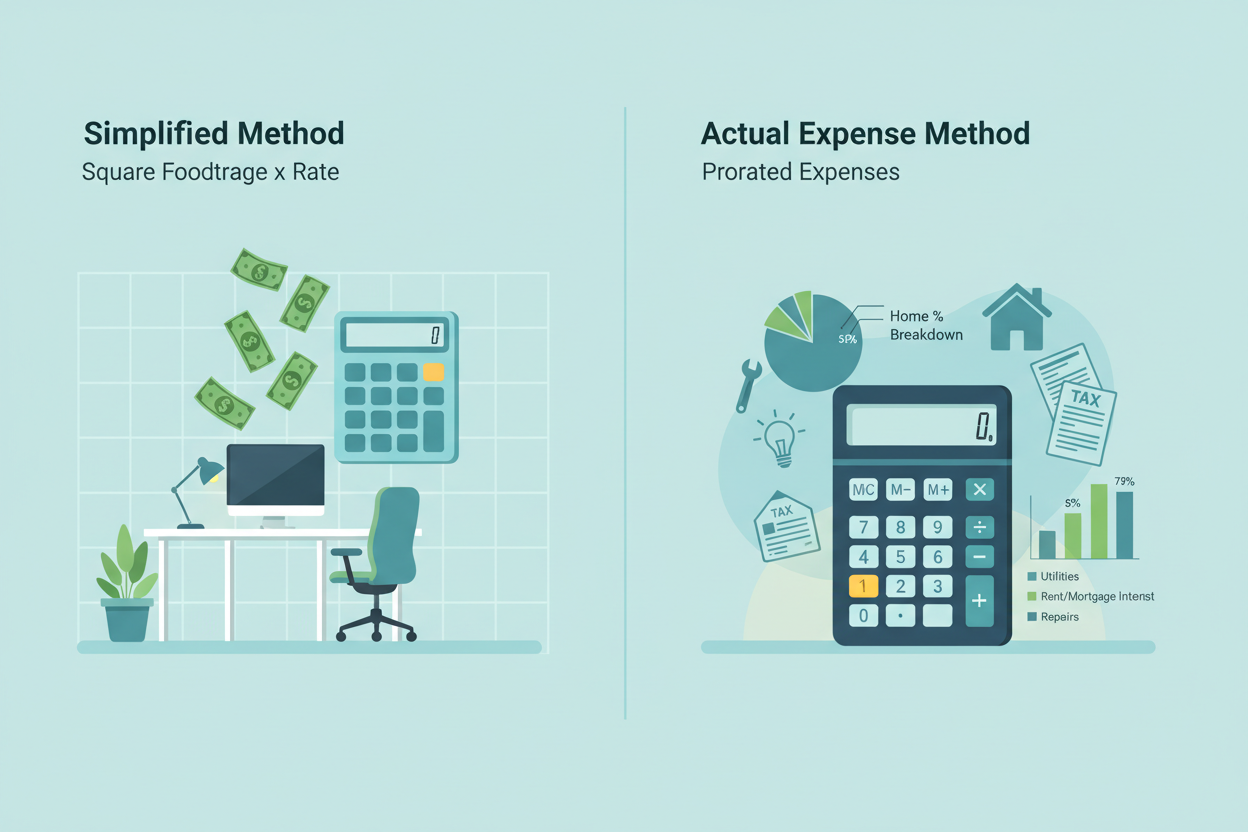
There are two methods for calculating this deduction. The simplified method allows you to deduct five dollars per square foot of your home office, up to 300 square feet, for a maximum deduction of $1,500. While this method is easier, the actual expense method often provides larger deductions for serious home business owners. This method requires you to calculate the percentage of your home used for business and apply that percentage to eligible home expenses like mortgage interest, property taxes, utilities, and maintenance costs.
Essential Business Expense Deductions Every Home Entrepreneur Should Know
Beyond the home office deduction, home-based entrepreneurs can claim numerous business expenses that significantly reduce their taxable income. Office supplies, from pens and paper to computers and software, are fully deductible when used exclusively for business purposes. Don’t overlook smaller purchases – they add up quickly throughout the year.
Professional development expenses represent another valuable deduction category. Books, courses, conferences, and workshops related to your business are all deductible. Even that online course you took to improve your marketing skills counts as a legitimate business expense.
Marketing and advertising costs are completely deductible, including website development, business cards, promotional materials, and social media advertising. If you’re paying for professional services like accounting, legal advice, or consulting, these expenses are also fully deductible.
Business insurance premiums, including professional liability and general business insurance, qualify as deductible expenses. Many home business owners overlook this deduction, but it can represent significant savings, especially for service-based businesses that carry substantial insurance coverage.
Vehicle Expenses and Business Travel: Maximizing Your Transportation Deductions
Transportation expenses can represent a substantial deduction for home business owners, but proper documentation is absolutely critical. The IRS offers two methods for calculating vehicle expenses: the standard mileage rate and actual expense method.
The standard mileage rate is simpler and often more beneficial for entrepreneurs who don’t drive extensively for business. For 2023, the rate is 65.5 cents per mile for business use. This method requires detailed mileage logs showing the date, destination, business purpose, and miles driven for each business trip.
The actual expense method involves tracking all vehicle-related costs, including gas, maintenance, insurance, and depreciation, then deducting the business percentage of these expenses. This method typically works better for entrepreneurs who use their vehicles heavily for business or have expensive vehicle-related costs.
Business travel expenses extend beyond just vehicle costs. Meals during business travel are 50% deductible, while lodging for overnight business trips is fully deductible. Even local business meals with clients or potential customers qualify for the 50% deduction, provided you maintain proper documentation of the business purpose and attendees.
Technology and Equipment: Depreciating Your Way to Tax Savings
Technology purchases represent both a necessary business expense and an excellent tax opportunity for home entrepreneurs. Computers, tablets, smartphones, printers, and software can all be deducted, but the method depends on the cost and your business needs.
Section 179 of the tax code allows businesses to immediately deduct the full cost of qualifying equipment purchases up to $1,080,000 for 2023, rather than depreciating them over several years. This provision is particularly beneficial for home businesses making significant equipment purchases.
For smaller technology purchases under $2,500, you can typically deduct the full cost in the year of purchase. Larger purchases may need to be depreciated over several years unless you elect Section 179 treatment.
Don’t forget about software subscriptions and cloud services. Monthly fees for business software, online storage, project management tools, and other digital services are fully deductible as business expenses. These recurring costs can add up to substantial deductions over the course of a year.
Record Keeping Best Practices: Protecting Your Deductions
Excellent record keeping isn’t just good business practice – it’s your best defense against IRS scrutiny and the foundation for maximizing your deductions. The IRS requires documentation for all business expenses, and the burden of proof falls on you as the taxpayer.
Maintain separate bank accounts and credit cards for business expenses. This separation makes tracking much easier and provides clear documentation of business versus personal expenses. Many entrepreneurs make the mistake of mixing personal and business expenses, which can complicate tax preparation and potentially disqualify legitimate deductions.
Digital receipt management has revolutionized record keeping for small businesses. Apps like Receipt Bank, Expensify, or even simple smartphone photos can help you capture and organize receipts immediately. The key is developing a consistent system and sticking to it throughout the year.
For vehicle expenses, maintain detailed mileage logs that include the date, starting and ending locations, business purpose, and miles driven. Many smartphone apps can automatically track business mileage, making this process much less burdensome than traditional paper logs.
Quarterly Tax Payments: Staying Ahead of Your Tax Obligations
Unlike traditional employees who have taxes withheld from each paycheck, home business owners are responsible for making quarterly estimated tax payments. Failing to make these payments can result in penalties and interest, even if you ultimately don’t owe additional tax when you file your annual return.
Calculate your quarterly payments based on either 100% of last year’s tax liability or 90% of the current year’s expected tax liability, whichever is smaller. If your prior year’s adjusted gross income exceeded $150,000, you’ll need to pay 110% of last year’s tax liability to avoid penalties.
Set aside money for taxes throughout the year rather than scrambling to make quarterly payments. A good rule of thumb is to save 25-30% of your business income for taxes, though your specific percentage may vary based on your total income and deductions.
Consider working with a tax professional to calculate your quarterly payments accurately. The cost of professional help is far less than the penalties and interest you might face for underpayment, and it’s a deductible business expense.
When to Seek Professional Tax Help
While many home business owners can handle basic tax preparation themselves, certain situations warrant professional assistance. If your business generates significant income, involves complex transactions, or operates in multiple states, a qualified tax professional can often save you more money than their fees cost.
Consider professional help if you’re facing an IRS audit, dealing with payroll taxes for employees, or making significant equipment purchases that involve depreciation calculations. Tax professionals stay current on changing regulations and can identify deductions you might miss.
The cost of professional tax preparation is itself a deductible business expense, making the actual cost lower than the quoted fee. When evaluating whether to hire help, consider not just the monetary cost but also the time you’ll save and the peace of mind that comes with professional expertise.
Planning for Tax Success Throughout the Year
Successful tax management for home businesses isn’t a once-a-year activity – it’s an ongoing process that requires attention throughout the year. Develop systems for tracking expenses, maintaining records, and planning major purchases to maximize their tax benefits.
Consider timing major business purchases strategically. If you need new equipment and expect higher income this year than next, making the purchase before year-end can provide immediate tax benefits. Conversely, if you expect lower income next year, delaying the purchase might be more beneficial.
Stay informed about tax law changes that affect small businesses. The tax code evolves regularly, and new opportunities or requirements can significantly impact your tax strategy. Following reputable tax publications or working with a professional who stays current on changes can help you adapt your approach as needed.
Review your tax situation quarterly rather than waiting until year-end. This approach allows you to make adjustments to your estimated payments, accelerate or defer income, and time business expenses for maximum tax benefit.
Running a successful home business involves much more than just generating revenue – it requires smart tax planning and meticulous record keeping to keep more of what you earn. By understanding available deductions, maintaining excellent records, and staying compliant with tax obligations, you can minimize your tax burden while building a profitable business. Remember that tax laws can be complex and change frequently, so don’t hesitate to seek professional guidance when needed. The investment in proper tax planning and preparation often pays for itself many times over in tax savings and peace of mind.
Free Traffic Sources
Get Access To 15 Of The HOTTEST Free Traffic Sources On The Planet!