Home Business: Creating a Brand Identity That Sets You Apart
Starting a home business is exciting, but here’s something many entrepreneurs overlook in their rush to get started: creating a strong brand identity. You might think branding is just for big corporations with massive marketing budgets, but that couldn’t be further from the truth. Your brand identity is what makes your home business memorable, trustworthy, and ultimately successful.
Think about it – when customers can’t physically visit your storefront or shake hands with you in person, your brand becomes the bridge that connects you to them. It’s how they recognize you, remember you, and decide whether to choose you over countless competitors. Whether you’re selling handmade jewelry from your kitchen table or offering consulting services from your home office, a well-crafted brand identity can be the difference between struggling to find clients and having them seek you out.
Understanding Brand Identity for Home Businesses
Brand identity isn’t just your logo or the colors you use on your website – though those elements certainly play important roles. It’s the complete personality of your business, encompassing everything from your visual elements to your voice, values, and the experience you create for customers.
For home businesses, brand identity serves a particularly crucial function. Since you’re often competing with larger companies that have established reputations, your brand needs to work harder to build trust and credibility. It’s your way of saying, “Yes, I work from home, but I’m just as professional and reliable as any traditional business.”

Your brand identity should reflect who you are as a person while maintaining the professionalism your customers expect. This personal touch is actually one of your biggest advantages over larger competitors – people love doing business with real people, not faceless corporations.
Defining Your Brand Values and Mission
Before you start thinking about logos and color schemes, you need to get crystal clear on what your business stands for. Your brand values are the principles that guide every decision you make, from how you interact with customers to the products or services you offer.
Start by asking yourself some fundamental questions: Why did you start this business? What problem are you solving for your customers? What do you want to be known for? Maybe you started your home bakery because you believe everyone deserves access to fresh, organic baked goods. Or perhaps your virtual assistant business exists because you want to help overwhelmed entrepreneurs reclaim their time.
Your mission statement doesn’t need to be fancy or corporate-sounding. In fact, the best mission statements for home businesses are often simple, heartfelt, and easy to understand. They should capture the essence of why you do what you do in a way that resonates with your ideal customers.
These values and mission will become the foundation for every other branding decision you make. They’ll influence your visual design, your marketing messages, and even how you handle customer service issues.
Identifying Your Target Audience
One of the biggest mistakes home business owners make is trying to appeal to everyone. When you try to be everything to everyone, you end up being nothing to anyone. Instead, you need to get specific about who your ideal customer is.
Creating a detailed customer avatar goes beyond basic demographics like age and income. You want to understand their pain points, their goals, their shopping habits, and even their personality traits. What keeps them up at night? What are they hoping to achieve? Where do they spend their time online?
Let’s say you’re starting a home-based pet grooming service. Your ideal customer might be busy professionals in their 30s and 40s who view their pets as family members. They value convenience and quality over the lowest price. They’re active on social media and often research businesses online before making decisions. Understanding these details helps you craft a brand that speaks directly to them.
This deep understanding of your audience will influence everything from the words you use in your marketing to the platforms where you promote your business. It ensures that every aspect of your brand identity resonates with the people most likely to become loyal customers.
Developing Your Visual Brand Elements
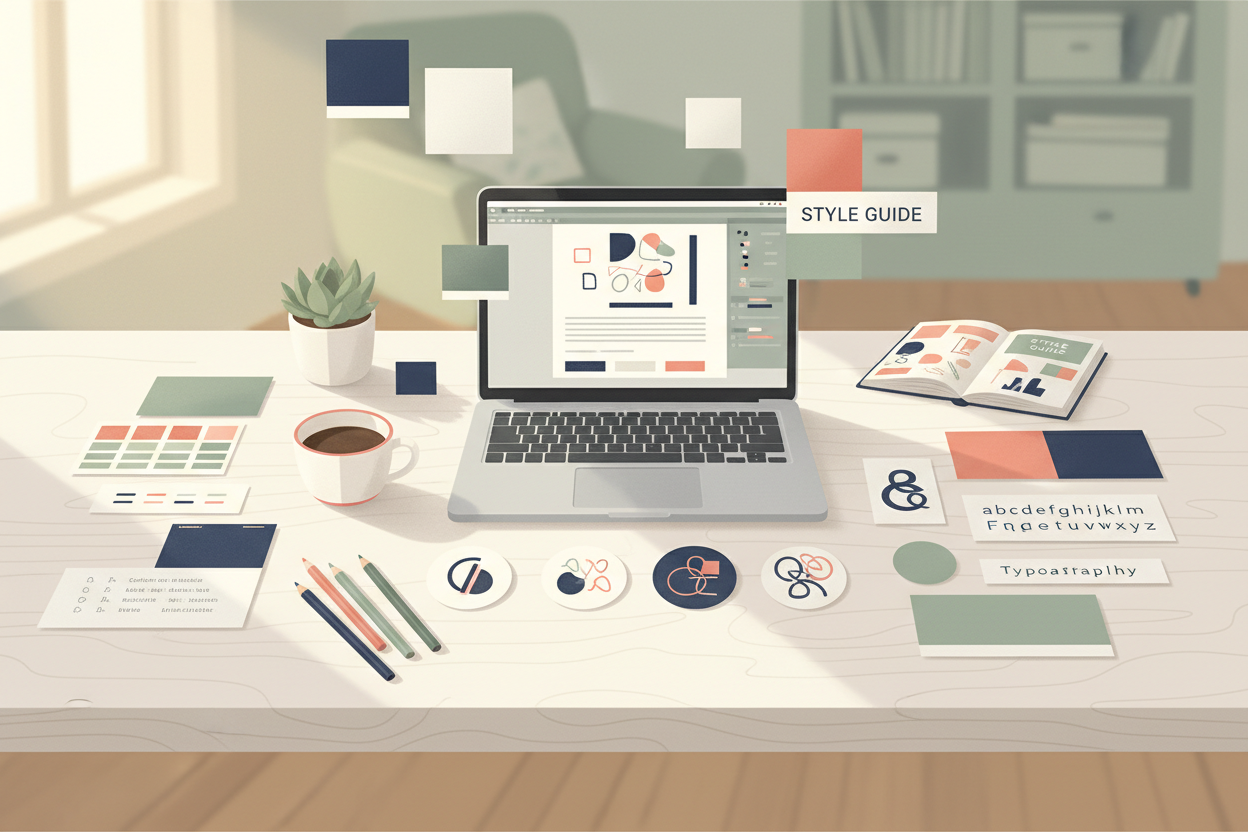
Now comes the fun part – bringing your brand to life visually. Your visual brand elements include your logo, color palette, typography, and imagery style. These elements should work together to create a cohesive look that reflects your brand’s personality and appeals to your target audience.
Your logo doesn’t need to be complicated or expensive. Some of the most recognizable brands in the world have incredibly simple logos. What matters more is that it’s memorable, scalable (looks good whether it’s on a business card or a billboard), and appropriate for your industry and audience.
Color psychology plays a significant role in how people perceive your brand. Blues often convey trust and reliability, making them popular choices for financial services. Greens can suggest growth, health, or environmental consciousness. Warm colors like orange and red can create feelings of energy and excitement. Choose colors that align with the emotions you want your brand to evoke.
Typography is often overlooked, but it’s incredibly powerful. The fonts you choose can make your brand feel modern or traditional, playful or serious, luxurious or approachable. Make sure your chosen fonts are readable across different devices and platforms.
Your imagery style includes the types of photos, illustrations, or graphics you use consistently across your marketing materials. This might include the color treatment of your photos, the style of illustrations, or the overall mood of your visual content.
Creating Your Brand Voice and Messaging
Your brand voice is how your business “sounds” when it communicates. Are you friendly and conversational, or professional and authoritative? Do you use humor, or do you keep things serious? Your brand voice should reflect your personality while remaining appropriate for your industry and audience.
Consistency is key here. Whether someone reads your website, follows you on social media, or receives an email from you, they should immediately recognize that it’s coming from your brand. This doesn’t mean every piece of content needs to sound identical, but there should be common threads that tie everything together.
Your messaging includes the key points you want to communicate about your business. What makes you different from competitors? What benefits do you provide? What’s your unique selling proposition? These messages should be woven throughout all your marketing materials in various ways.
For home businesses, authenticity in your brand voice is particularly important. People expect a more personal touch when dealing with smaller businesses, so don’t be afraid to let your personality shine through. Just make sure it’s the professional version of your personality.
Building Brand Consistency Across Platforms
Once you’ve established your brand identity, the challenge becomes maintaining consistency across all the places your business appears. This includes your website, social media profiles, business cards, email signatures, packaging, and any other customer touchpoints.
Create a simple brand guidelines document that outlines your logo usage, color codes, fonts, voice characteristics, and key messages. This becomes your reference guide to ensure everything you create aligns with your brand identity. Even as a solo entrepreneur, this document will help you maintain consistency as your business grows.
Pay special attention to your online presence, as this is often where potential customers first encounter your brand. Your website should be the hub of your brand identity, with all other platforms supporting and reinforcing the same message and visual style.
Don’t forget about the physical aspects of your business either. If you ship products, your packaging should reflect your brand. If you meet clients in person, your appearance and the materials you bring should align with your brand identity.
Measuring and Evolving Your Brand
Brand building isn’t a one-and-done activity. As your home business grows and evolves, your brand may need to evolve too. Pay attention to how customers respond to your brand. Are they engaging with your content? Do they understand what you offer? Are you attracting the right type of customers?
Customer feedback is invaluable for understanding how your brand is perceived. Don’t be afraid to ask clients what drew them to your business or what they think makes you different from competitors. Their answers might surprise you and could reveal opportunities to strengthen your brand positioning.
Social media analytics, website metrics, and sales data can also provide insights into which aspects of your brand are resonating and which might need adjustment. Maybe certain colors or types of content generate more engagement, or perhaps specific messaging leads to more inquiries.
Remember that evolution doesn’t mean complete overhaul. Small refinements over time are usually more effective than dramatic changes that might confuse existing customers.
Conclusion
Creating a strong brand identity for your home business isn’t just about looking professional – it’s about building a connection with your ideal customers and differentiating yourself in a crowded marketplace. When done thoughtfully, your brand becomes one of your most valuable business assets.
Start with a clear understanding of your values, mission, and target audience. Build visual elements and messaging that authentically represent your business and appeal to your ideal customers. Then, consistently apply these elements across all customer touchpoints while remaining open to evolution as your business grows.
Remember, you don’t need a massive budget to create an effective brand identity. What you need is clarity about who you are, who you serve, and what makes you special. With these foundations in place, your home business brand can compete with anyone – and win customers who value what you uniquely offer.
Your brand identity is an investment in your business’s future. Take the time to get it right, and it will serve as a powerful tool for attracting customers, building trust, and growing your home business for years to come.
Free Traffic Sources
Get Access To 15 Of The HOTTEST Free Traffic Sources On The Planet!