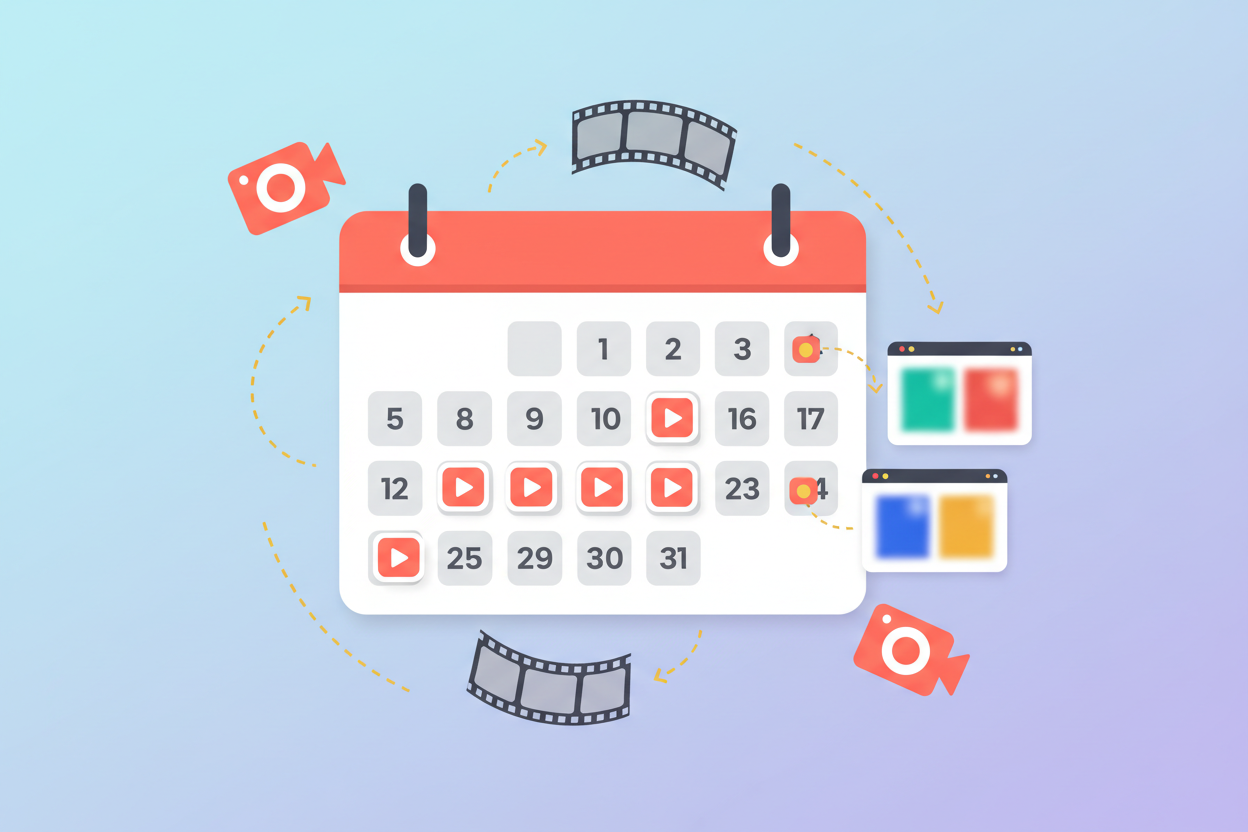
Video Marketing: Building a Content Calendar That Drives Results
Picture this: it’s Monday morning, and you’re staring at a blank screen, wondering what video content to create for your brand this week. Sound familiar? If you’ve found yourself scrambling for video ideas at the last minute, you’re not alone. The secret weapon that separates successful video marketers from the rest isn’t just creativity—it’s strategic planning through a well-crafted content calendar.
Video marketing has become the cornerstone of digital strategy, with 91% of businesses using video as a marketing tool. But creating compelling video content consistently requires more than just pointing a camera and hitting record. It demands thoughtful planning, strategic timing, and a clear roadmap that aligns with your business goals.

A video content calendar serves as your north star, guiding every piece of content you create while ensuring you never miss important opportunities or deadlines. Whether you’re a solopreneur managing your own social media or part of a marketing team at a growing company, building an effective video content calendar will transform your marketing efforts from reactive to proactive.
Why Your Video Marketing Strategy Needs a Content Calendar
Think of a content calendar as your video marketing GPS. Without it, you’re essentially driving blindfolded through the digital landscape, hoping to stumble upon your destination. A structured approach to video content planning offers numerous benefits that extend far beyond simple organization.
Consistency becomes your superpower when you have a content calendar in place. Your audience begins to anticipate your content, creating a sense of reliability that builds trust and engagement. Instead of posting sporadically when inspiration strikes, you maintain a steady presence that keeps your brand top-of-mind.
Resource allocation becomes significantly more efficient when you plan ahead. You can batch similar content types, book equipment or locations in advance, and coordinate with team members without the stress of last-minute rushes. This forward-thinking approach often results in higher-quality content since you have adequate time for planning, filming, and editing.
Strategic alignment with business objectives becomes natural when you map out your content in advance. You can ensure that each video serves a specific purpose in your marketing funnel, whether that’s building awareness, nurturing leads, or driving conversions.
Essential Elements of an Effective Video Content Calendar
Building a robust video content calendar requires several key components working in harmony. Your calendar should be comprehensive enough to guide decision-making while remaining flexible enough to accommodate unexpected opportunities or changes in strategy.
Content themes form the backbone of your calendar structure. These overarching topics or categories help maintain consistency in your messaging while providing variety in your content. For instance, you might dedicate Mondays to educational content, Wednesdays to behind-the-scenes footage, and Fridays to customer spotlights.
Publication schedules need to reflect both your audience’s online behavior and your production capabilities. Research when your target audience is most active on different platforms, but also be realistic about your content creation bandwidth. It’s better to publish two high-quality videos per week consistently than to burn out trying to post daily.
Platform-specific adaptations ensure your content performs optimally across different channels. A single video concept might need different formats, lengths, and calls-to-action depending on whether it’s destined for YouTube, Instagram, TikTok, or LinkedIn.
Performance tracking mechanisms should be built into your calendar from the start. Plan how you’ll measure success for each piece of content, whether through views, engagement rates, click-throughs, or conversions.
Step-by-Step Guide to Creating Your Video Content Calendar
Creating your first video content calendar might seem overwhelming, but breaking it down into manageable steps makes the process much more approachable. Start with a clear understanding of your goals and work backward to create a system that supports those objectives.
Begin by conducting a thorough audit of your existing video content. What types of videos have performed well? Which topics resonate most with your audience? This historical data provides valuable insights that should inform your future content strategy.
Next, define your content pillars—typically three to five core themes that align with your brand values and audience interests. These pillars will serve as the foundation for all your video content, ensuring consistency while providing enough variety to keep your audience engaged.
Choose your planning timeframe based on your business needs and content complexity. Many successful video marketers plan quarterly with monthly deep-dives and weekly adjustments. This approach provides enough structure for strategic planning while maintaining flexibility for timely content.
Select tools that match your team size and workflow preferences. Simple spreadsheets work well for small teams, while larger organizations might benefit from dedicated content management platforms like CoSchedule, Hootsuite, or Asana.
Map out key dates and events that should influence your content strategy. This includes industry conferences, product launches, seasonal trends, and relevant holidays. These anchor points help you plan timely, relevant content that capitalizes on existing conversations and search trends.
Content Types and Themes for Maximum Engagement
Diversifying your video content types keeps your audience engaged while serving different purposes in your marketing strategy. The most successful video marketing calendars incorporate a strategic mix of educational, entertaining, and promotional content.
Educational content establishes your brand as a trusted authority in your industry. How-to tutorials, industry insights, and explainer videos provide genuine value to your audience while naturally incorporating your expertise. These videos often have longer shelf lives and continue generating traffic long after publication.
Behind-the-scenes content humanizes your brand and builds emotional connections with your audience. Office tours, day-in-the-life videos, and team introductions create authenticity that resonates particularly well on social media platforms.
Customer-focused content, including testimonials, case studies, and user-generated content, provides social proof while showcasing real-world applications of your products or services. These videos often drive the highest conversion rates because they feature authentic experiences from real customers.
Trending and timely content helps you tap into current conversations and algorithm boosts on social platforms. However, this content type requires flexibility in your calendar to respond quickly to emerging trends or news events.
Tools and Platforms for Video Content Planning
The right tools can make the difference between a content calendar that empowers your team and one that becomes another administrative burden. Your choice should depend on your team size, technical requirements, and integration needs with existing systems.
Spreadsheet-based solutions like Google Sheets or Excel offer simplicity and universal accessibility. They work particularly well for small teams or those just starting with content planning. You can create custom templates that include all necessary information while maintaining easy sharing and collaboration capabilities.
Dedicated content management platforms provide more sophisticated features like automated publishing, performance analytics, and team collaboration tools. Platforms like Buffer, Sprout Social, and Later offer video-specific features that can streamline your entire workflow from planning to publication.
Project management tools such as Trello, Asana, or Monday.com excel at managing the production process behind your videos. They’re particularly valuable for teams handling complex video projects that require coordination between multiple departments or external vendors.
Social media management platforms often include content calendar features alongside publishing and analytics tools. This integration can be particularly valuable for maintaining consistency across multiple social media channels.
Measuring Success and Optimizing Your Calendar
A content calendar is only as valuable as the results it produces, making regular measurement and optimization crucial for long-term success. Establishing clear metrics and review processes ensures your calendar evolves with your audience’s preferences and business needs.
Define key performance indicators that align with your broader marketing objectives. While vanity metrics like views and likes provide some insight, focus on metrics that directly impact your business goals, such as website traffic, lead generation, or sales conversions.
Implement regular review cycles to assess your content performance and adjust your strategy accordingly. Monthly reviews allow you to identify patterns and trends, while quarterly reviews provide opportunities for more significant strategic pivots.
Pay attention to audience feedback and engagement patterns to understand what resonates most with your viewers. Comments, shares, and save rates often provide more valuable insights than basic view counts.
A/B testing different content types, posting times, and formats helps you optimize your calendar based on data rather than assumptions. Document these experiments within your calendar to build institutional knowledge over time.
Common Pitfalls to Avoid When Building Your Video Content Calendar
Even well-intentioned content calendars can fall short if they incorporate common planning mistakes. Learning to recognize and avoid these pitfalls will save you time and improve your results from the start.
Over-planning can be just as problematic as under-planning. While structure is important, leaving room for spontaneous content and trending topics keeps your calendar dynamic and responsive to real-time opportunities.
Ignoring platform-specific requirements often leads to poor performance across channels. Each platform has unique audience expectations, optimal video lengths, and algorithmic preferences that should influence your content planning.
Failing to account for production timelines frequently results in rushed content or missed deadlines. Build realistic buffers into your calendar that account for filming, editing, approval processes, and potential revisions.
Creating content in isolation without considering your broader marketing strategy reduces the impact of your video efforts. Ensure your video calendar aligns with email campaigns, product launches, and other marketing initiatives for maximum synergy.
Conclusion
Building an effective video content calendar transforms your marketing from reactive scrambling to strategic execution. It provides the structure needed to create consistent, high-quality content while maintaining the flexibility to capitalize on unexpected opportunities.
Remember that your first content calendar doesn’t need to be perfect. Start with a simple structure that you can actually maintain, then gradually add complexity as your processes mature and your team grows more comfortable with the system.
The investment you make in planning today will pay dividends in improved content quality, reduced stress, and better marketing results. Your audience will notice the difference, your team will appreciate the clarity, and your business will benefit from more strategic, purposeful video marketing efforts.
Take action today by choosing a planning tool and mapping out your next month of video content. Your future self will thank you for the foresight, and your audience will reward you with increased engagement and loyalty.
Free Traffic Sources
Get Access To 15 Of The HOTTEST Free Traffic Sources On The Planet!