Internet Marketing: The Role of Data Analytics in Driving Digital Success
In today’s digital landscape, internet marketing without data analytics is like driving blindfolded on a busy highway. You might move forward, but you’re unlikely to reach your destination safely or efficiently. As someone who’s witnessed the evolution of digital marketing over the past decade, I can confidently say that data analytics has transformed from a nice-to-have luxury into an absolute necessity for any successful online marketing strategy.
The marriage between internet marketing and data analytics isn’t just about collecting numbers and creating fancy charts. It’s about understanding your audience’s behavior, predicting market trends, and making informed decisions that drive real business growth. Whether you’re a small business owner trying to maximize your limited marketing budget or a marketing professional at a Fortune 500 company, understanding how to leverage data analytics can be the difference between campaigns that soar and those that crash and burn.

Understanding Data Analytics in Internet Marketing Context
Data analytics in internet marketing refers to the systematic examination of digital marketing data to uncover patterns, trends, and insights that inform strategic decision-making. Think of it as your marketing crystal ball, but instead of mystical powers, it uses concrete evidence from user interactions, campaign performance, and market behavior to guide your next moves.
The beauty of digital marketing lies in its measurability. Unlike traditional marketing methods where you might wonder if your billboard actually influenced someone’s purchase decision, internet marketing provides a treasure trove of trackable data points. Every click, scroll, share, and conversion leaves a digital footprint that, when properly analyzed, tells a compelling story about your audience and campaign effectiveness.
Modern data analytics tools can process vast amounts of information in real-time, transforming raw data into actionable insights. This capability has revolutionized how marketers approach campaign optimization, audience targeting, and budget allocation. Instead of relying on gut feelings or outdated assumptions, marketers can now make data-driven decisions that significantly improve their return on investment.
Key Data Analytics Tools and Platforms for Digital Marketers
The data analytics ecosystem for internet marketing is rich and diverse, offering solutions for every budget and skill level. Google Analytics remains the cornerstone of most marketers’ analytics toolkit, providing comprehensive insights into website traffic, user behavior, and conversion tracking. Its free tier offers robust functionality that can satisfy most small to medium-sized businesses’ analytical needs.
For more advanced analysis, platforms like Adobe Analytics, Mixpanel, and Hotjar provide deeper insights into user experience and behavior patterns. These tools offer features like heat mapping, session recordings, and advanced segmentation capabilities that help marketers understand not just what users do, but why they do it.
Social media analytics platforms such as Sprout Social, Hootsuite Analytics, and native platform insights from Facebook, Instagram, and LinkedIn provide crucial data for social media marketing campaigns. These tools help marketers understand engagement patterns, optimal posting times, and audience demographics across different social platforms.
Email marketing platforms like Mailchimp, Constant Contact, and ConvertKit come equipped with built-in analytics that track open rates, click-through rates, and conversion metrics. These insights are invaluable for optimizing email campaigns and improving subscriber engagement over time.
How Data Analytics Transforms Campaign Performance and ROI
The impact of data analytics on campaign performance is nothing short of revolutionary. I’ve seen campaigns transform from money-draining disasters to profit-generating machines simply by applying proper analytical insights. The key lies in understanding which metrics matter most for your specific goals and continuously optimizing based on data-driven findings.
Real-time analytics allow marketers to make immediate adjustments to underperforming campaigns. Instead of waiting weeks or months to assess campaign effectiveness, modern analytics tools provide instant feedback on ad performance, allowing for quick pivots and optimizations. This agility can mean the difference between a campaign that breaks even and one that delivers exceptional returns.
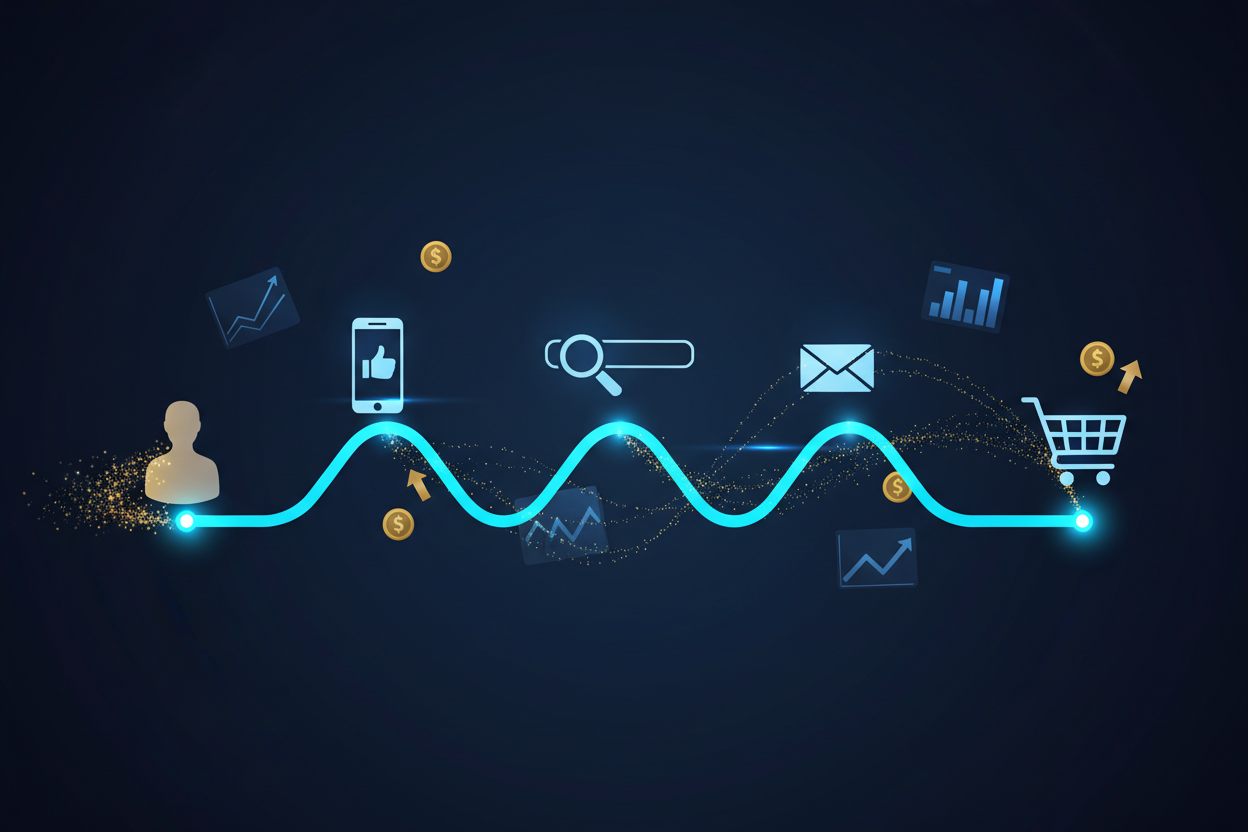
Attribution modeling, powered by advanced analytics, helps marketers understand the complete customer journey across multiple touchpoints. This comprehensive view enables more accurate ROI calculations and better budget allocation across different marketing channels. For instance, you might discover that while social media doesn’t directly drive many conversions, it plays a crucial role in initial brand awareness that later converts through search or email marketing.
Predictive analytics takes campaign optimization to the next level by forecasting future performance based on historical data and current trends. This capability allows marketers to proactively adjust strategies, allocate budgets more effectively, and identify potential opportunities or threats before they fully materialize.
Customer Behavior Analysis and Audience Segmentation Strategies
Understanding your audience is the foundation of effective internet marketing, and data analytics provides unprecedented insights into customer behavior patterns. Through careful analysis of user interactions, purchase histories, and engagement metrics, marketers can create detailed customer personas that go far beyond basic demographic information.
Behavioral segmentation reveals how different groups of customers interact with your brand, products, and content. You might discover that mobile users behave differently than desktop users, or that customers acquired through social media have different lifetime values compared to those from search engines. These insights enable more targeted and effective marketing strategies.
Advanced analytics can identify micro-moments in the customer journey where users are most likely to convert or abandon their purchase. By understanding these critical decision points, marketers can implement targeted interventions, such as retargeting campaigns or personalized email sequences, to guide users toward conversion.
Customer lifetime value analysis helps prioritize marketing efforts toward the most valuable segments. Instead of treating all customers equally, data analytics reveals which segments generate the highest long-term value, allowing for more strategic resource allocation and personalized marketing approaches.
Personalization and Targeted Marketing Through Data Insights
The era of one-size-fits-all marketing is long gone, replaced by hyper-personalized experiences driven by data analytics. Modern consumers expect relevant, timely, and personalized interactions with brands, and data analytics makes this level of customization possible at scale.
Dynamic content personalization uses real-time data to adjust website content, email messages, and ad creatives based on individual user preferences and behavior patterns. This approach can significantly improve engagement rates and conversion probabilities by delivering the right message to the right person at the right time.
Recommendation engines, powered by collaborative filtering and machine learning algorithms, analyze user behavior and preferences to suggest relevant products or content. These systems, similar to those used by Amazon and Netflix, can dramatically increase average order values and customer satisfaction by helping users discover items they’re likely to purchase.
Geolocation data enables location-based marketing strategies that can drive foot traffic to physical stores or deliver region-specific promotions. Combined with time-based analytics, marketers can create highly targeted campaigns that reach users when they’re most likely to take action.
Measuring Success: Essential KPIs and Metrics in Data-Driven Marketing
The abundance of available metrics in digital marketing can be overwhelming, but focusing on the right key performance indicators is crucial for meaningful analysis. The metrics that matter most depend on your specific business goals, but certain KPIs are universally important for most internet marketing campaigns.
Conversion rate remains one of the most critical metrics, as it directly relates to business outcomes. However, modern analytics goes beyond simple conversion tracking to include micro-conversions, assisted conversions, and conversion path analysis. Understanding the complete conversion funnel helps identify optimization opportunities at every stage of the customer journey.
Customer acquisition cost and lifetime value provide crucial insights into the long-term sustainability of marketing efforts. These metrics help determine whether current marketing investments are generating profitable returns and guide strategic decisions about scaling or adjusting campaigns.
Engagement metrics such as time on site, pages per session, and social media engagement rates indicate how well your content resonates with your audience. High engagement often correlates with better conversion rates and stronger brand loyalty, making these metrics valuable leading indicators of campaign success.
Attribution metrics help understand how different marketing channels contribute to conversions, enabling more accurate budget allocation and channel optimization. Multi-touch attribution models provide a more comprehensive view of the customer journey than simple last-click attribution, revealing the true value of each marketing touchpoint.
Future Trends: AI, Machine Learning, and Predictive Analytics in Marketing
The future of data analytics in internet marketing is being shaped by artificial intelligence and machine learning technologies that promise even more sophisticated insights and automation capabilities. These technologies are already beginning to transform how marketers approach campaign optimization, audience targeting, and performance prediction.
Automated optimization algorithms can continuously adjust campaign parameters based on real-time performance data, often achieving better results than manual optimization. These systems can process vast amounts of data and identify optimization opportunities that human analysts might miss, leading to improved campaign performance and efficiency.
Predictive analytics powered by machine learning can forecast customer behavior, market trends, and campaign performance with increasing accuracy. This capability enables proactive marketing strategies that anticipate customer needs and market changes before they occur, providing significant competitive advantages.
Natural language processing and sentiment analysis are becoming increasingly sophisticated, enabling marketers to analyze unstructured data from social media, reviews, and customer feedback. This technology provides deeper insights into customer opinions, brand perception, and emerging trends that traditional analytics might miss.
Conclusion: Embracing Data-Driven Internet Marketing for Sustainable Growth
The role of data analytics in internet marketing has evolved from a supplementary tool to the central nervous system of successful digital marketing strategies. As we’ve explored throughout this post, data analytics empowers marketers to understand their audiences better, optimize campaigns more effectively, and achieve superior return on investment through informed decision-making.
The marketers who thrive in today’s competitive digital landscape are those who embrace data-driven approaches while maintaining the creativity and strategic thinking that makes marketing an art as much as a science. The key is finding the right balance between analytical rigor and creative innovation, using data insights to inform and enhance rather than replace human intuition and creativity.
As technology continues to advance and new analytical capabilities emerge, the importance of data analytics in internet marketing will only grow. The organizations and marketers who invest in developing strong analytical capabilities today will be best positioned to capitalize on future opportunities and navigate the increasingly complex digital marketing ecosystem.
Remember, data analytics isn’t about replacing human judgment with cold numbers – it’s about augmenting human intelligence with powerful insights that enable better decisions and more effective marketing strategies. The future belongs to marketers who can harness the power of data while never losing sight of the human element that drives all successful marketing efforts.
Free Traffic Sources
Get Access To 15 Of The HOTTEST Free Traffic Sources On The Planet!