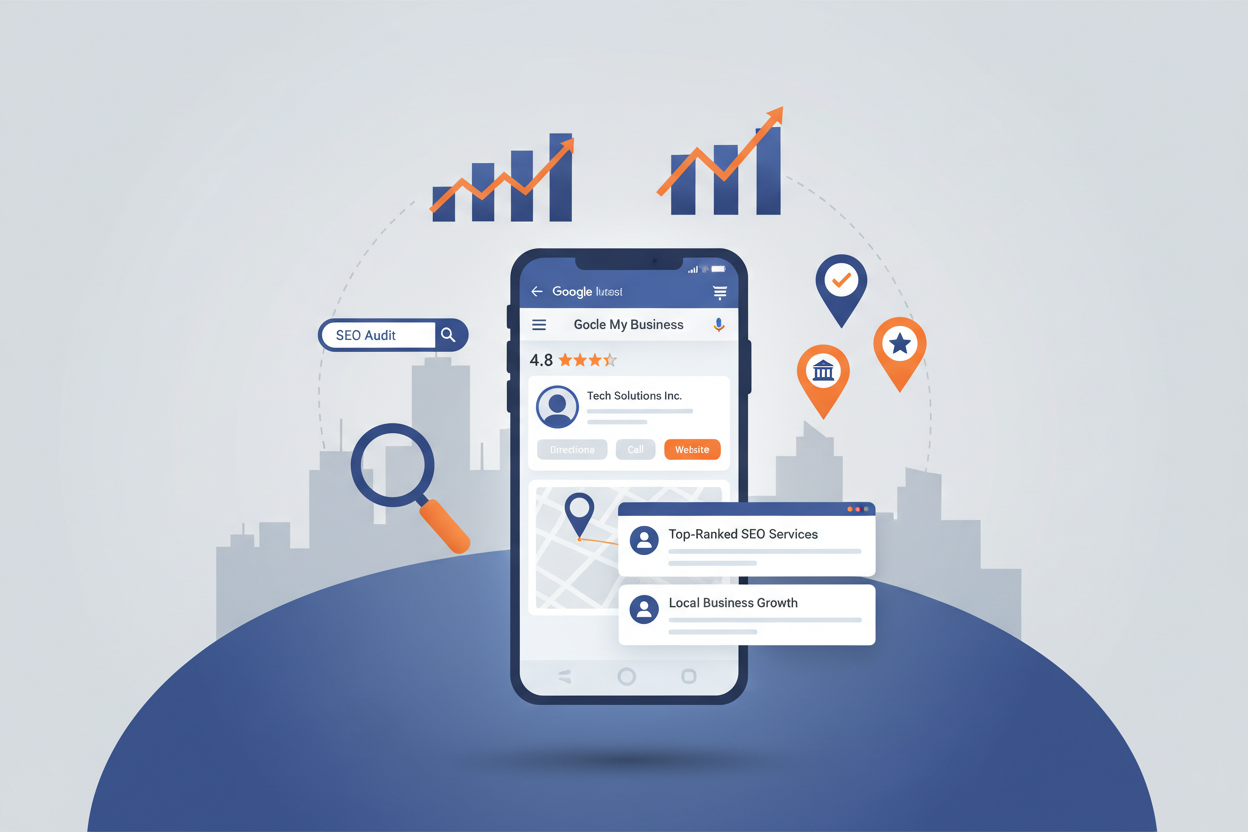
SEO for Local Search: Optimizing Google My Business for Maximum Visibility
If you’re running a local business, you’ve probably heard the phrase “local SEO” thrown around more times than you can count. But here’s the thing – while everyone talks about it, many business owners still struggle to understand what it actually means and how to make it work for them. At the heart of local SEO lies one incredibly powerful tool that can make or break your online presence: Google My Business.
Think about the last time you searched for “coffee shop near me” or “best pizza delivery.” Chances are, you didn’t scroll past the first few results that popped up with those handy maps, phone numbers, and customer reviews. That’s Google My Business in action, and if your business isn’t showing up there, you’re essentially invisible to potential customers who are actively looking for what you offer.

In this comprehensive guide, we’ll dive deep into the world of Google My Business optimization, exploring proven strategies that can help your local business climb the rankings and attract more customers. Whether you’re just getting started or looking to refine your existing approach, you’ll discover actionable tips that can transform your local search presence.
Understanding Google My Business and Its Impact on Local SEO
Google My Business isn’t just another social media platform or directory listing – it’s your digital storefront in the world’s largest search engine. When someone searches for businesses like yours in your area, Google pulls information from your GMB profile to display in local search results, Google Maps, and the knowledge panel that appears on the right side of search results.
The statistics speak for themselves: 46% of all Google searches have local intent, and 76% of people who search for something nearby visit a business within a day. Even more compelling, 28% of those searches result in a purchase. This means that optimizing your Google My Business profile isn’t just about visibility – it’s about driving real, measurable business results.
What makes GMB particularly powerful is its integration with Google’s ecosystem. Your profile information appears across Google Search, Google Maps, and even Google Assistant voice searches. This omnipresence means that a well-optimized GMB profile can capture customers at multiple touchpoints throughout their buying journey.
Setting Up Your Google My Business Profile for Success
Creating a Google My Business profile might seem straightforward, but there’s a significant difference between having a basic listing and having an optimized one that actually drives results. The foundation of effective local SEO starts with getting these basics absolutely right.
First, claim and verify your business listing. This step is crucial because unverified listings have limited functionality and appear less trustworthy to both Google and potential customers. The verification process typically involves receiving a postcard with a verification code at your business address, though Google sometimes offers phone or email verification for certain business types.
Once verified, focus on completeness. Google rewards comprehensive profiles, and customers trust businesses that provide detailed information. This means filling out every available field, from your business hours and phone number to your website URL and business description. Incomplete profiles not only rank lower in search results but also create friction for potential customers who can’t find the information they need.
Accuracy is equally important. Ensure that your business name, address, and phone number (often called NAP data) are identical across your GMB profile, website, and other online directories. Inconsistent information confuses both search engines and customers, potentially harming your local search rankings.
Mastering Google My Business Categories and Keywords
Choosing the right categories for your business is one of the most critical decisions you’ll make for your GMB optimization. Your primary category should accurately reflect your main business activity and match what customers would search for when looking for your services.
Google allows you to select additional categories, and you should take advantage of this feature strategically. For example, if you run a restaurant, your primary category might be “Restaurant,” but you could add secondary categories like “Pizza Restaurant,” “Italian Restaurant,” or “Family Restaurant” depending on your specific offerings. However, avoid the temptation to add irrelevant categories just to capture more searches – this can actually hurt your rankings for your core business activities.
Your business description is another opportunity to incorporate relevant keywords naturally. This 750-character field should clearly explain what your business does, what makes it unique, and include location-specific terms when appropriate. Think about how your customers would describe your business to a friend, and use that natural language in your description.
Remember that keyword stuffing – cramming as many keywords as possible into your description – will backfire. Google’s algorithms are sophisticated enough to recognize and penalize this practice. Instead, focus on creating a compelling, informative description that happens to include your most important keywords.
The Power of Customer Reviews in Local Search Rankings
Customer reviews are the lifeblood of local SEO, serving as both a ranking factor and a conversion tool. Google considers the quantity, quality, and recency of reviews when determining local search rankings, while potential customers rely on reviews to make purchasing decisions.
Actively encouraging reviews should be part of your regular business operations. This doesn’t mean badgering customers, but rather creating natural opportunities for satisfied customers to share their experiences. Consider sending follow-up emails after purchases, including review requests on receipts, or simply asking happy customers in person if they’d be willing to leave a review.
When reviews do come in – both positive and negative – respond to them promptly and professionally. Responding to reviews shows that you value customer feedback and are actively engaged with your community. For positive reviews, a simple thank you goes a long way. For negative reviews, address the concern publicly and offer to resolve the issue offline.
The key to review management is consistency and authenticity. Don’t try to game the system with fake reviews – Google’s detection algorithms are increasingly sophisticated, and the penalties for fake reviews can be severe. Instead, focus on providing exceptional service that naturally generates positive reviews over time.
Optimizing Your Business Information and Attributes
The devil is in the details when it comes to GMB optimization, and those details can make a significant difference in your local search performance. Your business hours, for instance, should be meticulously accurate and updated regularly, especially during holidays or special events. Nothing frustrates potential customers more than showing up to a business that’s supposed to be open according to Google, only to find it closed.
Take advantage of Google’s attributes feature to highlight what makes your business special. These attributes allow you to specify things like “wheelchair accessible,” “outdoor seating,” “free Wi-Fi,” or “accepts credit cards.” While these might seem like minor details, they can be the deciding factor for customers choosing between similar businesses.
Your phone number deserves special attention. Use a local phone number whenever possible, as this reinforces your local presence to both Google and customers. If you use call tracking numbers for marketing purposes, make sure they forward to your actual business number and don’t interfere with your GMB listing.
Don’t overlook the importance of your website URL. This should link to your main website, not a social media page or third-party platform. Your website serves as the hub of your online presence, and driving traffic there from your GMB profile helps establish authority and provides more opportunities for conversion.
Leveraging Google Posts and Updates
Google Posts are one of the most underutilized features of Google My Business, yet they offer a direct way to communicate with potential customers right in the search results. These posts appear in your business listing and can include text, images, and call-to-action buttons.
Think of Google Posts as micro-blog entries that showcase what’s happening at your business. You can announce new products or services, share special offers, highlight upcoming events, or simply provide updates about your business. The key is to post regularly – ideally weekly – to keep your listing fresh and engaging.
Each post can include up to 1,500 characters of text, though shorter posts often perform better. Include relevant keywords naturally, but focus primarily on providing value to your audience. High-quality images are crucial for Google Posts, as visual content tends to attract more attention and engagement.
Different types of posts serve different purposes. Event posts are perfect for promoting upcoming sales or special events, while offer posts can highlight current promotions with specific terms and conditions. Product posts allow you to showcase individual items or services, complete with pricing information.
The Critical Role of Photos and Visual Content
Visual content is incredibly powerful in local search, with businesses that include photos in their GMB listings receiving 42% more requests for driving directions and 35% more click-throughs to their websites. But not all photos are created equal – the quality, relevance, and variety of your images all matter.
Your profile photo and cover photo are the first things potential customers see, so make them count. Your profile photo should be your logo or a professional image that clearly represents your business. The cover photo offers more creative flexibility – consider using an image that showcases your products, services, or the atmosphere of your business.
Beyond these primary images, regularly upload photos that give customers a genuine sense of what to expect. Interior and exterior shots help customers find and recognize your business, while photos of your products, services, or team members create a personal connection. Customer-generated photos are particularly valuable, as they provide authentic perspectives on your business.
Keep your photo library fresh by adding new images regularly. Seasonal updates, new product launches, and behind-the-scenes glimpses all provide opportunities for new visual content. Google tends to favor businesses with recent, high-quality photos, so this ongoing effort can positively impact your search rankings.
Monitoring Performance and Analytics
Optimization without measurement is just guesswork. Google My Business provides detailed insights that help you understand how customers find and interact with your listing. These analytics are goldmines of information that can guide your optimization efforts and business decisions.
Pay attention to how customers search for your business – whether they’re finding you through direct searches for your business name, discovery searches for your category, or branded searches that include your business name. This information helps you understand your market position and identify opportunities for improvement.
Customer actions are equally important metrics. Track how many people call your business, visit your website, or request directions from your GMB listing. These actions represent genuine business value, and understanding which aspects of your listing drive these behaviors helps you optimize more effectively.
Use this data to refine your strategy continuously. If you notice that certain types of posts generate more engagement, create more content in that style. If specific photos receive more views, consider what makes them appealing and apply those lessons to future images.
Conclusion: Your Path to Local Search Success
Optimizing your Google My Business profile isn’t a one-time task – it’s an ongoing process that requires attention, consistency, and strategic thinking. The businesses that succeed in local search are those that treat their GMB profiles as dynamic marketing tools rather than static directory listings.
Start with the fundamentals: ensure your profile is complete, accurate, and verified. Then, focus on the elements that drive the most impact: encouraging authentic reviews, posting regular updates, and maintaining fresh, high-quality photos. Remember that local SEO is ultimately about connecting with your community, and your GMB profile should reflect the personality and values that make your business special.
The investment you make in GMB optimization today will pay dividends for years to come. As local search continues to grow in importance – especially with the rise of voice search and mobile commerce – having a strong foundation in place positions your business for long-term success. Take the time to implement these strategies thoughtfully, monitor your results, and adjust your approach based on what you learn. Your future customers are searching for businesses like yours right now, and with a well-optimized Google My Business profile, they’ll find you first.
Free Traffic Sources
Get Access To 15 Of The HOTTEST Free Traffic Sources On The Planet!